
Conservative
Slow and steady
$1.4m to $1.9m
ConfidenceHigh
- Key driver
- Steady, proven revenue
- Key risk
- Slower growth than the market
Raise a smaller round, keep more ownership
Dev-only (noindex). Reusable showcase-article blocks rendered with placeholder data.
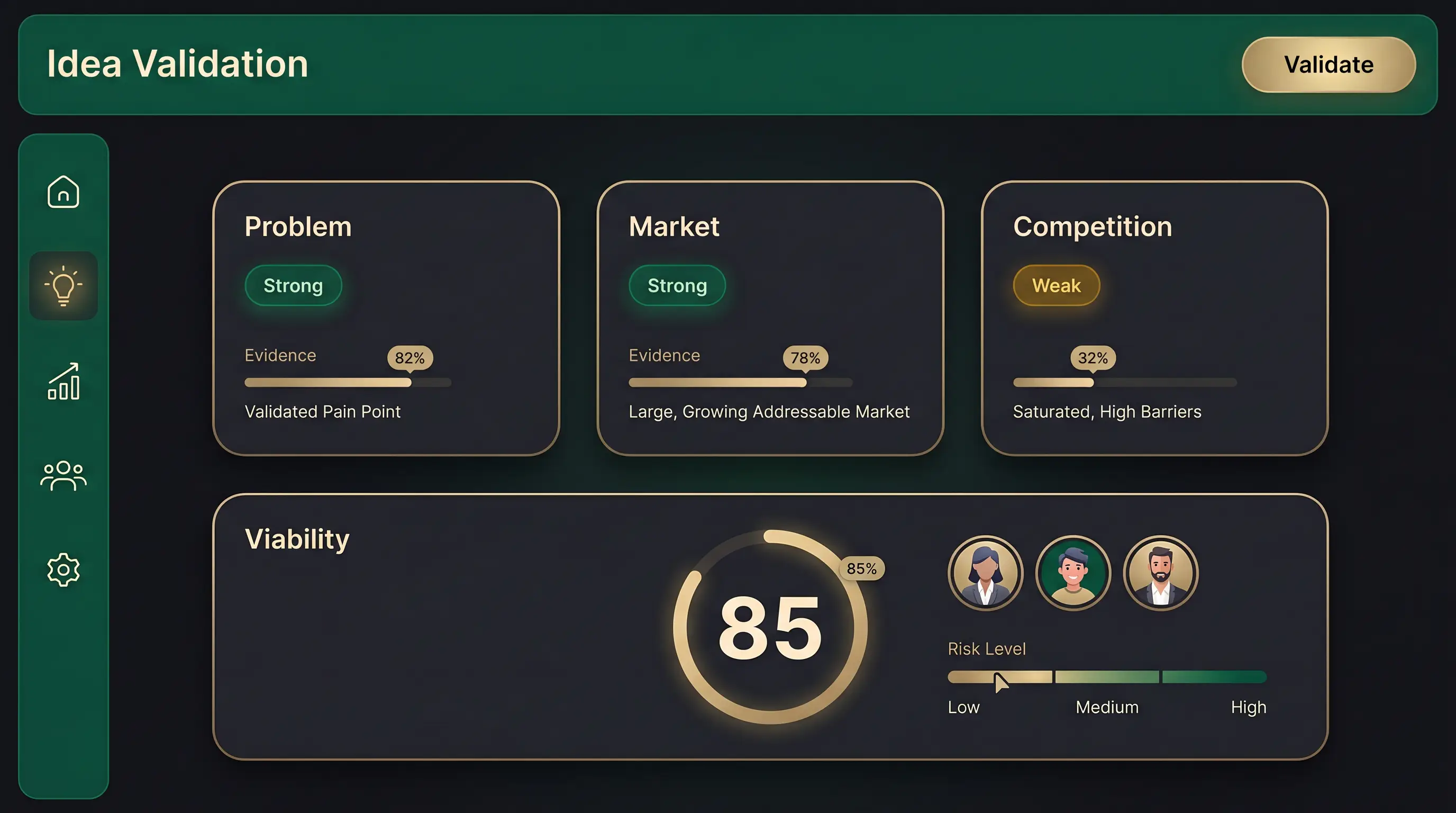
Many first-time founders know their product idea but cannot translate it into numbers. They may know the price they want to charge, the customer they want to serve, and the team they think they need, but they do not yet have a model that links those assumptions into a forecast. That gap makes it hard to decide whether the idea is viable, how much cash is needed, or whether the plan is credible to others.
The fix is to start with drivers, not a blank spreadsheet. The core drivers of almost any early model are price, customer growth, churn or repeat behaviour, headcount, major operating costs, and timing. Small-business guidance makes the same point: projections should be explained and matched to the funding request, and monthly or quarterly detail matters most in the first year.
A model helps you answer practical questions before you raise money or hire people. It lets you estimate profit, do break-even thinking, identify startup costs, and understand how timing affects cash. Those are not just finance outputs. They are decision tools that tell you whether to spend, hire, or raise next month.
Large models are especially hard to validate. Research on spreadsheets shows that incorrect bottom-line values often persist undetected, so a model you cannot trace is a model you cannot trust.
A spreadsheet can absolutely help you prototype, but it becomes harder to trust once assumptions, scenarios, and outputs spread across tabs. The issue is not arithmetic. It is auditability: spreadsheet errors are common, hard to detect, and made worse by overconfidence.
| Feature | Startup Suiteconnected | A spreadsheetthe manual way |
|---|---|---|
| Speed | Structured around assumptions and connected outputs | Flexible for quick arithmetic |
| Reliability | Easier to trace logic from assumption to forecast | Easy to break with hidden formulas or copy and paste errors |
| Planning | Keeps planning, scenarios, and investor-ready outputs connected | Often separates forecasting from the narrative plan |
Advisors and consultants can help, but they do not eliminate the founder's need to understand the model. A CPA, bookkeeper, or online service can help with accounting, yet there is a real difference between tailored specialist review and the day-to-day tool you use to make decisions.
| Feature | Startup Suiteongoing | A consultantepisodic |
|---|---|---|
| Best for | Building and updating the plan yourself | Specialist review and financial polish |
| Cadence | An ongoing planning workspace | Engaged at specific milestones |
| When assumptions move | Changes are easy to make and trace | Often delivers a static output |
Startup Suite's Forecast Engine gives founders a guided way to turn assumptions into connected forecasts without forcing them into a brittle spreadsheet-first workflow. It is built for the first model you can explain out loud: price, growth, costs, margin, runway, and funding implications in one place.
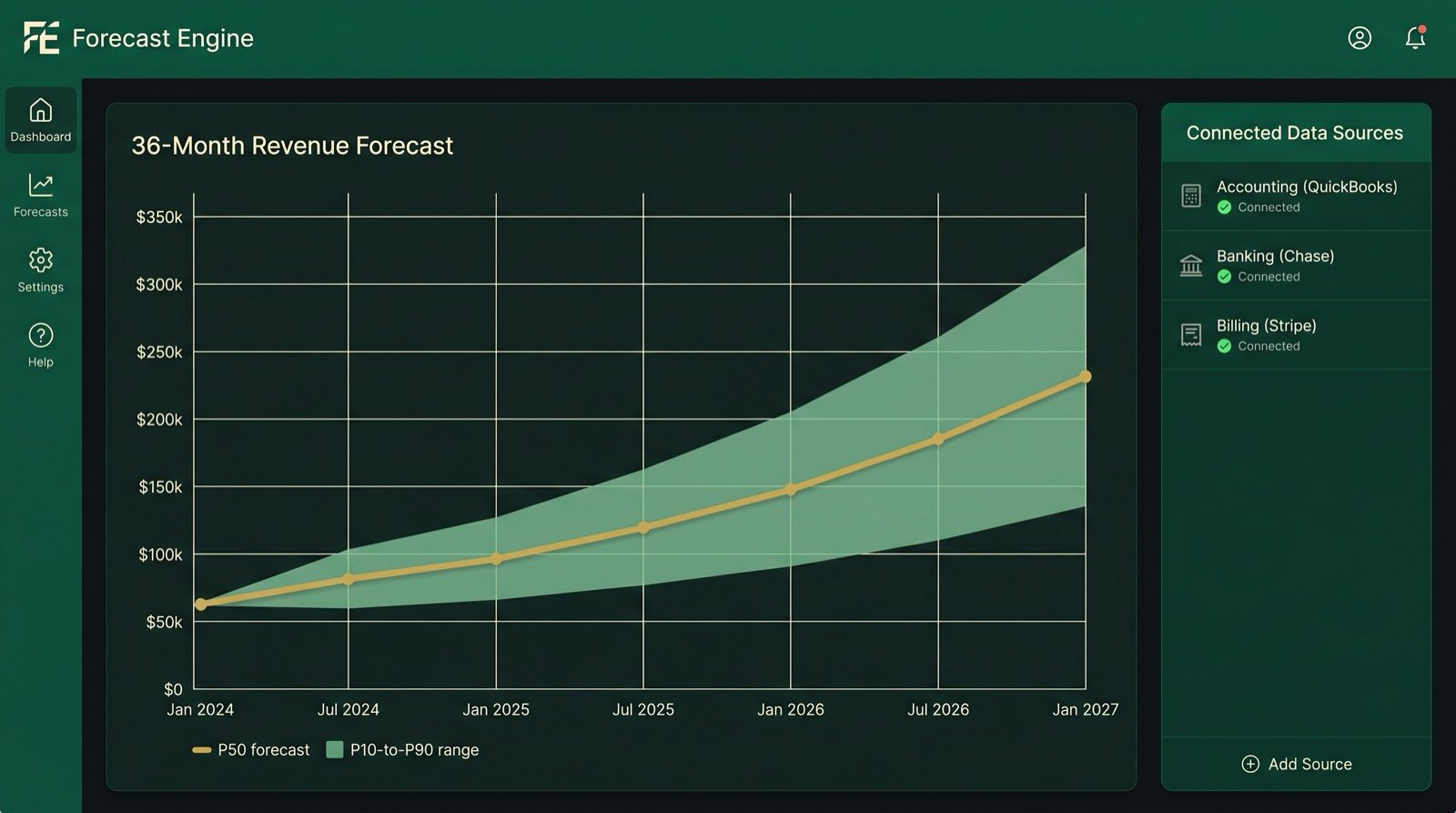
Assume a founder plans to sell a software product for 49 dollars per month, add 40 customers per month, and expects 3 percent monthly churn. Month-one MRR is 40 times 49, which is 1,960 dollars.
If month two adds another 40 customers and 3 percent churn applies to the month-one cohort, that cohort becomes 40 times 97 percent, or 38.8 customers. Month-two active customers are 38.8 plus 40, which is 78.8. Month-two MRR is 78.8 times 49, which is 3,861.20 dollars.
If fixed monthly costs are 9,000 dollars, the model shows the idea is not yet cash-neutral and still needs more sales, lower costs, better retention, or funding. The arithmetic is simple. The planning implications are the point.
Watch the 60-second summary
Assuming their expenses remain constant and their revenue growth is what it has been ... do they make it to profitability on the money they have left? Or to put it more dramatically, by default do they live or die?
Most founders can't answer that. Startup Suite is how you do, with numbers you can explain.
Assuming their expenses remain constant and their revenue growth is what it has been ... do they make it to profitability on the money they have left? Or to put it more dramatically, by default do they live or die?
Most founders can't answer that. Startup Suite is how you do, with numbers you can explain.
Your valuation range is mainly driven by revenue growth, recurring revenue quality, and how confident your forecast is.
Your valuation range is mainly driven by revenue growth, recurring revenue quality, and how confident your forecast is.
Slower and safer, your current plan, or a bigger swing. See the range, the confidence, and the trade-off side by side before you choose.
Example scenarios with sample values, for planning and education only, not financial or valuation advice.
“How does this startup compare to similar early-stage companies?”
“Has the founder reduced enough risk to justify value?”
“Which risks increase or reduce the valuation?”
“What could the business be worth based on revenue and growth?”
“How does recurring revenue influence value?”
“What is the business worth based on operating profit?”
“What is the owner-operated business worth?”
“What is the future cash flow worth today?”
“How do similar companies or deals influence value?”
“What is the business worth based on assets minus liabilities?”
“What valuation could make sense for investors based on future exit potential?”
“What quick industry benchmark can sanity-check the valuation?”
Build your plan, connect your numbers, and see this working on your own business, no finance team required.
From idea to investor-ready · built for founders, not finance teams
Build the model behind this guide on your own startup, no finance background needed.
From idea to investor-ready · built for founders, not finance teams
Join the founders building their plan with Startup Suite.