Idea to Investor-Ready: The Planning Steps in Order
Early planning usually ends up scattered: idea validation in notes, pricing in a spreadsheet, runway in someone's head, investor answers spread across documents. The fix is to work through them in order, so the price, costs and burn you settle at each step carry into the next.
· Updated · 4 min read

On this page
- Each planning step uses the numbers from the one before, so treat them as one process.
- The path runs from idea validation, to a model, to runway, to a plan, to investor readiness.
- In this guide's example, revenue covers fixed costs in month 7 and cash never falls below about $62,800.
From idea to raise, step by step
A practical early-stage sequence looks like this:
- Test whether the idea solves a real problem.
- Estimate pricing and market demand.
- Build a first financial model.
- Understand cash runway and burn.
- Turn the plan into a lender-ready or investor-ready narrative.
- Prepare scenario answers before raising money.
Why connected planning matters
Each step uses the numbers from the one before. The price you test in validation becomes the revenue line in the model, and the model's net burn sets the runway. Change one and the others go out of date. When those pieces live in different places, the founder loses the thread, and so does every lender or investor who reviews the plan.
Where spreadsheets break down
| Feature | Startup Suite | A spreadsheet |
|---|---|---|
| Best when | Assumptions, forecasts, scenarios, and narrative must stay aligned | Doing an isolated, one-off analysis |
| Over time | Built for connected planning and stakeholder communication | Often becomes tab-heavy and fragile |
| As it grows | Designed to support founder comprehension and investor Q and A | Harder to audit as complexity grows |
- Best when
- Assumptions, forecasts, scenarios, and narrative must stay aligned
- Over time
- Built for connected planning and stakeholder communication
- As it grows
- Designed to support founder comprehension and investor Q and A
- Best when
- Doing an isolated, one-off analysis
- Over time
- Often becomes tab-heavy and fragile
- As it grows
- Harder to audit as complexity grows
Why this is fair: Mistakes in a large spreadsheet are easy to make and hard for the person who built it to spot, because they read the formula they meant to write. The risk is in tracing the logic, and the arithmetic is rarely the problem.
Where consultants fit
A consultant is most useful at the end of the sequence, checking the investor pack or supporting the round itself. They can't make the pricing and churn calls at the start, and every later number depends on those.
One workspace for every stage
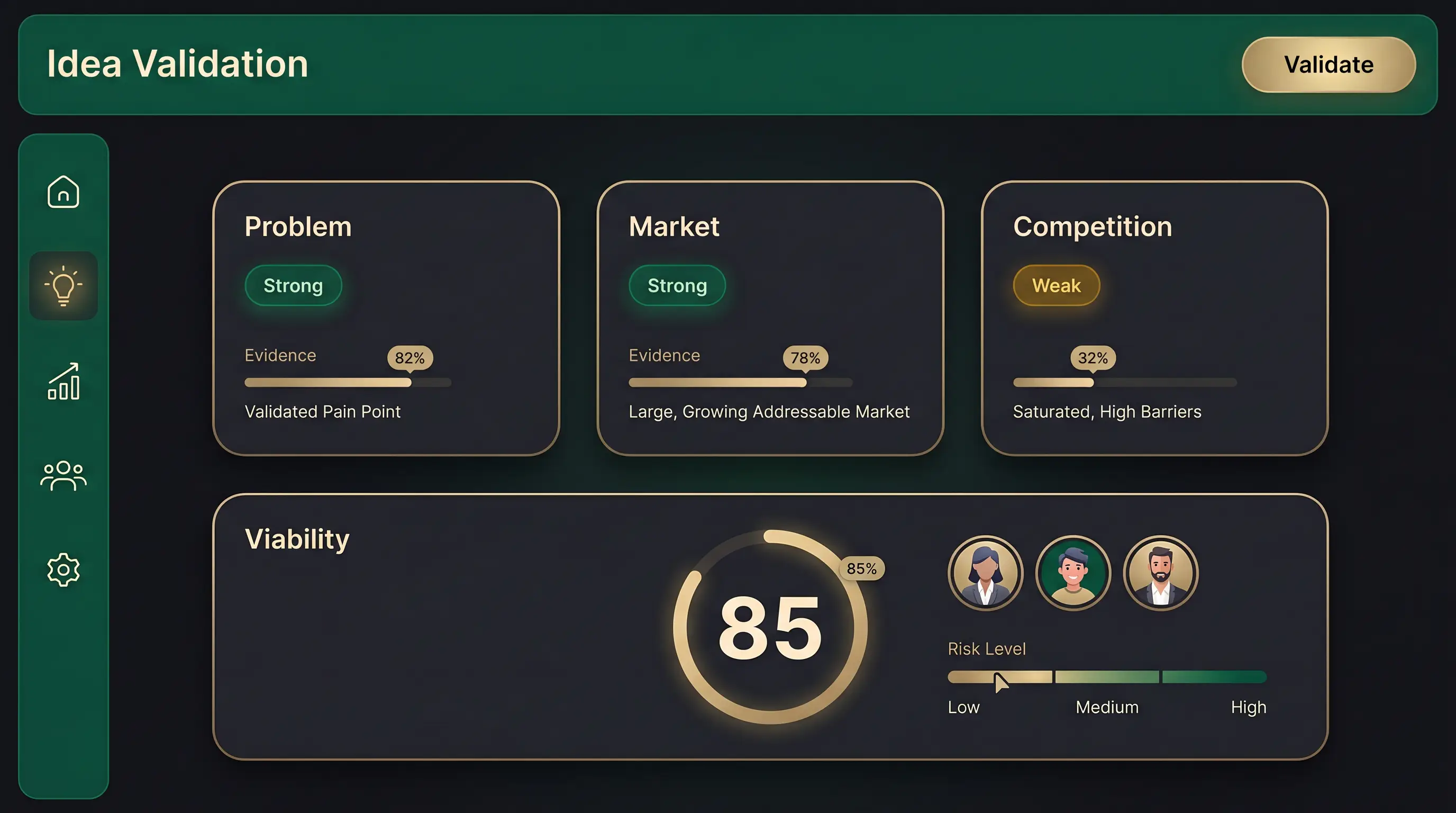
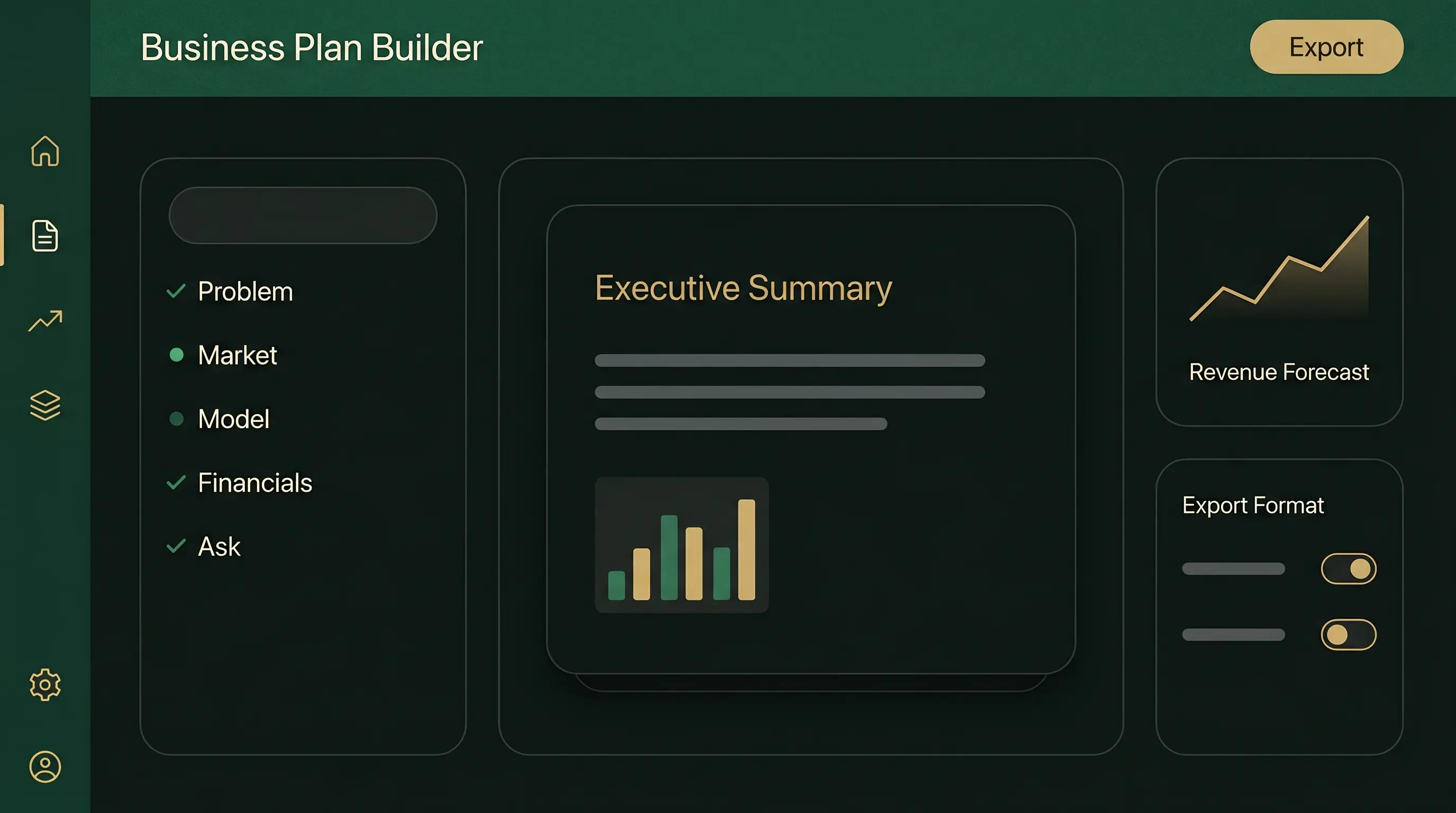
Startup Suite is built as the founder's planning layer across every stage: Idea Validation to test the idea, Forecast Engine to build the model and track runway, Business Plan Builder to turn it into a narrative, Scenario Workbench to stress-test it, and Investor Portal to present it. The workspaces are designed to work from one set of assumptions, so the numbers stay consistent as they move from model to plan to pitch.
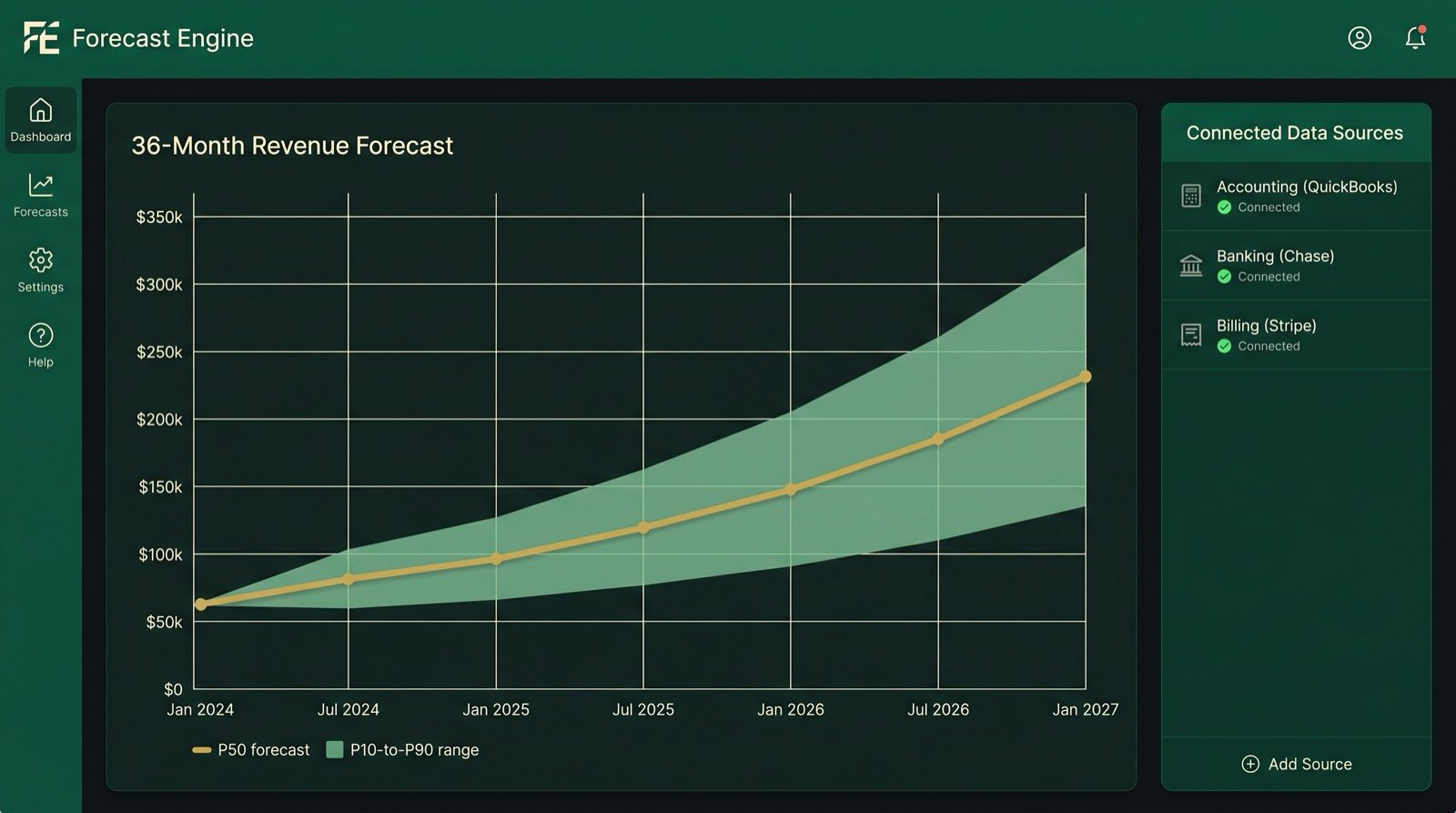
One connected planning layer, idea to raise
- Built to validate, model, and plan on a single set of assumptions.
- Designed so an input changed once flows through every view.
- Meant to get you into an investor meeting with answers that already reconcile.
One set of assumptions, start to finish
Take a founder starting with a price of $79 per month, 25 new customers per month, 4 percent monthly churn, $11,000 of fixed monthly operating costs, and $90,000 of starting cash.
Run those numbers forward, applying churn to existing customers before adding each month's new ones. Revenue covers fixed costs in month 7, at about 155 customers. Cash bottoms out near $62,800 in month 6, so on these assumptions the $90,000 lasts. Add a salary or slower sign-ups and the same model shows the month a raise becomes necessary (variable costs left out for simplicity).
Idea to investor-ready
Frequently asked questions
Where should I start if I am very early?
Start with idea validation and a first financial model, then layer in runway, the business plan, and investor readiness as you go.
Still have questions? Talk to the team.
Keep reading