How Much Should You Actually Raise?
The most defensible fundraising target adds up the net burn you will run until your next milestone, the one-off costs to reach it, and a contingency, less the cash already in the bank. Every dollar of the ask then has a stated reason.
· Updated · 3 min read

On this page
- A simple raise target adds up forecast net burn for each month of runway, plus milestone costs, plus contingency, minus the cash you already hold.
- Size the raise to reach a specific milestone, such as a revenue run-rate or a product launch.
- Build in contingency, because plans rarely run exactly as forecast.
- Justify the amount with a clear use-of-funds story.
A simple structure for the amount
Ask for too little and you run out of time before the milestone. Ask for too much without a use-of-funds table and investors will question the plan. Start from a simple structure.
A simple raise target: Forecast net burn for each month of runway you want, added up, plus one-time milestone costs, plus contingency, minus the cash you already hold. Use forecast burn, not today's, because hiring after a raise pushes it up.
Raise to reach a milestone
Pick the milestone first, such as a revenue run-rate, a product launch or a retention figure the next investor will price on. Then raise enough to reach it with time left to run the next raise.
Modelling the amount without the story
| Feature | Startup Suite | A spreadsheet |
|---|---|---|
| The amount | Built to connect ask size to runway and milestones | Can model the amount in isolation |
| The story | Designed to explain why this amount and what it buys | Weak on investor narrative context |
- The amount
- Built to connect ask size to runway and milestones
- The story
- Designed to explain why this amount and what it buys
- The amount
- Can model the amount in isolation
- The story
- Weak on investor narrative context
Round strategy versus owning the numbers
An advisor can help with round structure and which investors to approach. The amount itself should come from your own forecast, before those conversations start.
Building the ask in Investor Portal
Startup Suite's Investor Portal is built so the ask comes from your forecast's burn, milestones and runway, and the number on the slide matches the plan behind it.
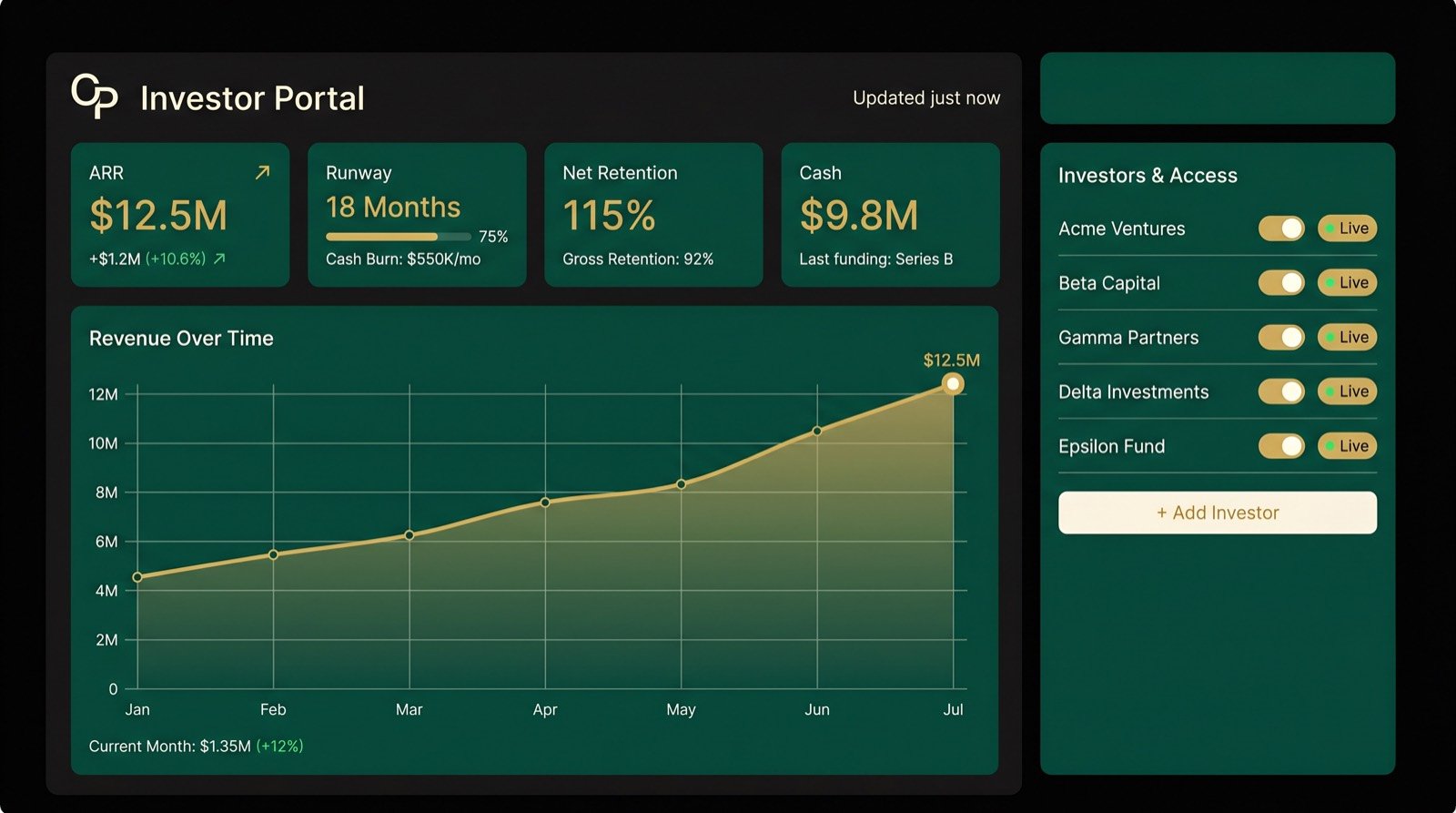
Investor Portal: an ask you can defend
- Built to work out the raise from net burn, runway, milestones, and contingency.
- Designed to show what the money buys and by when.
- Meant to keep the ask aligned with the forecast as the plan evolves.
Building a $490,000 ask
If net burn averages $22,000 a month across the plan, including the hires the raise pays for, and the founder wants 18 months of runway, the base is 22,000 times 18, which is $396,000. Add $54,000 for product buildout and a 10 percent contingency on the base operating runway, which is 396,000 times 10 percent, or $39,600.
The total ask is 396,000 plus 54,000 plus 39,600, which is $489,600, rounded to a $490,000 ask, assuming the company has almost no cash left when the round closes.
The point: Every part of that number has a reason. A use-of-funds table built this way is far easier to defend than a round figure picked to look ambitious.
How much should you raise?
Frequently asked questions
Should I build in contingency?
Usually yes. Plans rarely run exactly as forecast, and a cushion protects the milestone.
Is 18 months always right?
No. Work back from how long your milestone will take, then add the months you will need to run the next raise. For many plans that lands between 18 and 24 months.
Can I justify the raise with a use-of-funds table?
Yes, and you should. It is one of the clearest ways to explain the ask.
Still have questions? Talk to the team.