The Assumptions Investors Test First
Investors tend to pressure-test the assumptions that determine growth, margin, cash need, and milestone timing. They want to see the inputs behind each projection and hear why you chose them, so a clear list of assumptions does more for you than a polished headline chart.
· Updated · 3 min read

On this page
- Investors test assumptions before they trust outcomes.
- The first drivers probed are pricing, growth, churn, margin, hiring, burn, and use of funds.
- Show the downside case alongside the optimistic one.
- Back each assumption with evidence where you can.
The drivers investors check first
The founder often knows the headline number but not the drivers behind it. Investors immediately go looking for those drivers. The first assumptions they verify are usually these:
- Pricing: what customers pay now, and evidence they'll keep paying it
- Customer growth: which channels, at what conversion and spend
- Churn or repeat rate: measured from real cohorts, not assumed
- Gross margin: whether it improves with scale, and why
- Hiring pace: when each hire starts and what it makes possible
- Burn and runway: whether runway reaches the milestones claimed
- Use of funds: what the raise buys and which milestone it reaches
Assumptions buried in formulas
| Feature | Startup Suite | A spreadsheet |
|---|---|---|
| Assumptions | Shown as named inputs you can point to | May be buried in formulas |
| Follow-ups | Set up for the questions investors ask next | Harder to answer an investor's next question quickly |
- Assumptions
- Shown as named inputs you can point to
- Follow-ups
- Set up for the questions investors ask next
- Assumptions
- May be buried in formulas
- Follow-ups
- Harder to answer an investor's next question quickly
Rehearsed answers versus current answers
Rehearsal helps, but your numbers move between meetings. Before each pitch, check that the answers you rehearsed still match the current model, especially burn, runway and the month you run out of cash.
Linking answers in Investor Portal
Startup Suite's Investor Portal is built to link assumptions to forecast views and investor answers, so the numbers behind each assumption sit next to the forecast they drive.
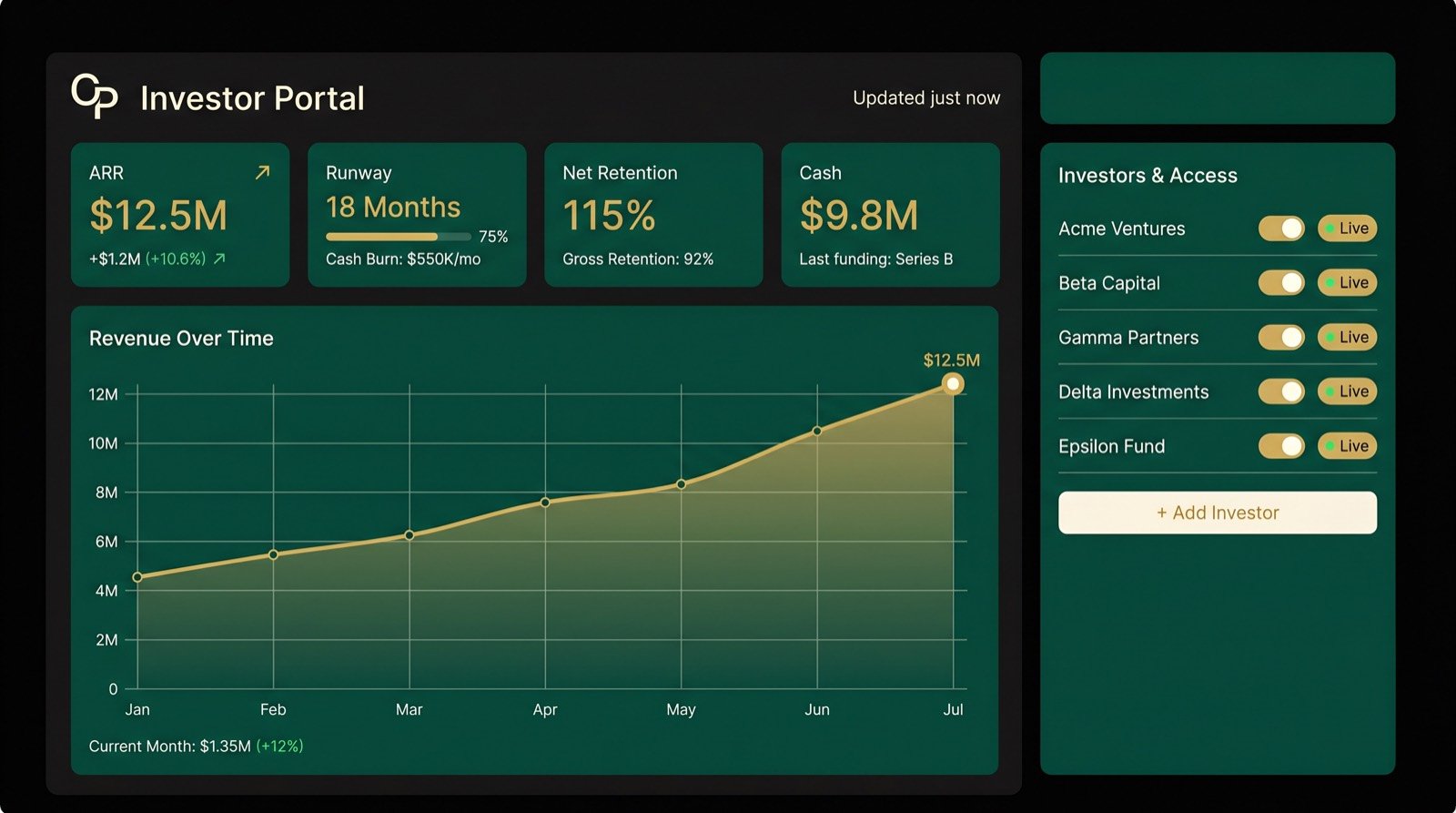
Investor Portal: the assumptions behind each number
- Built to show the assumptions behind every headline number.
- Designed to take you from a question to the supporting view without losing the thread.
- Prepare downside cases before the meeting instead of improvising them.
Why 60 new customers a month?
If revenue assumes 60 new customers per month, investors will ask why 60, from which channels, at what customer acquisition cost, at what churn rate, and what happens if it is only 35.
The takeaway: Write the answers down before the meeting: the channel split behind the 60, the CAC and churn you assumed, and what runway looks like at 35. If the 35 case runs out of cash before the next milestone, an investor will find that, so find it first.
The assumptions investors test
Frequently asked questions
Should I show downside assumptions too?
Yes. Show the month cash runs out if growth comes in at your low case, and what you would cut first.
Are investor-tested assumptions always financial?
No. Investors also test whether the plan can be delivered: can you reach the channel at the volume assumed, and can the team you plan to hire do the work in time?
Should each assumption have evidence?
As much as possible, yes: pilot conversion rates, signed letters of intent, paid waitlist sign-ups or supplier quotes for margin. Where you have none, say so and show the downside case.
Still have questions? Talk to the team.