Fixed vs Variable Cost Planning
Cost planning works better when founders separate fixed costs from variable costs and understand how each affects break-even and cash. Identify and estimate expenses before launch, including salaries, insurance, professional services and the cost of each unit you sell, then sort them so you can see your break-even point and how profit moves with volume.
· Updated · 3 min read

On this page
- Split fixed from variable costs first; break-even and profit at any volume follow from that.
- Contribution per unit is price minus variable cost per unit.
- Break-even units equal fixed costs divided by contribution per unit.
- Estimate expenses before launch, not after the bills arrive.
Splitting costs into fixed and variable
Operating leverage means profit moves faster than sales because fixed costs stay put: once they are covered, each extra sale adds its full contribution to profit. You can see that, and your break-even point, only once costs are split into fixed and variable.
Fixed vs variable: Fixed costs stay roughly the same whatever your volume, like rent and salaries. Variable costs rise with each unit you sell, like materials or per-order fees.
Cost buckets without break-even logic
| Feature | Startup Suite | A spreadsheet |
|---|---|---|
| Cost categories | Built to link categories to contribution and break-even logic | Cost buckets are possible |
| Planning | Built for scenario testing | Break-even must be rebuilt by hand when a cost moves |
- Cost categories
- Built to link categories to contribution and break-even logic
- Planning
- Built for scenario testing
- Cost categories
- Cost buckets are possible
- Planning
- Break-even must be rebuilt by hand when a cost moves
Costs that fit neither bucket
Some costs fit neither bucket. A support hire is fixed until volume forces a second one, and card fees are variable but may carry a monthly minimum. Treat these as steps, fixed within a range of volume, and recheck the split each quarter.
Mapping costs in Forecast Engine
Startup Suite's Forecast Engine is built to map cost categories into forecast outcomes, so a change to a fixed or variable line carries through to contribution, break-even and cash.
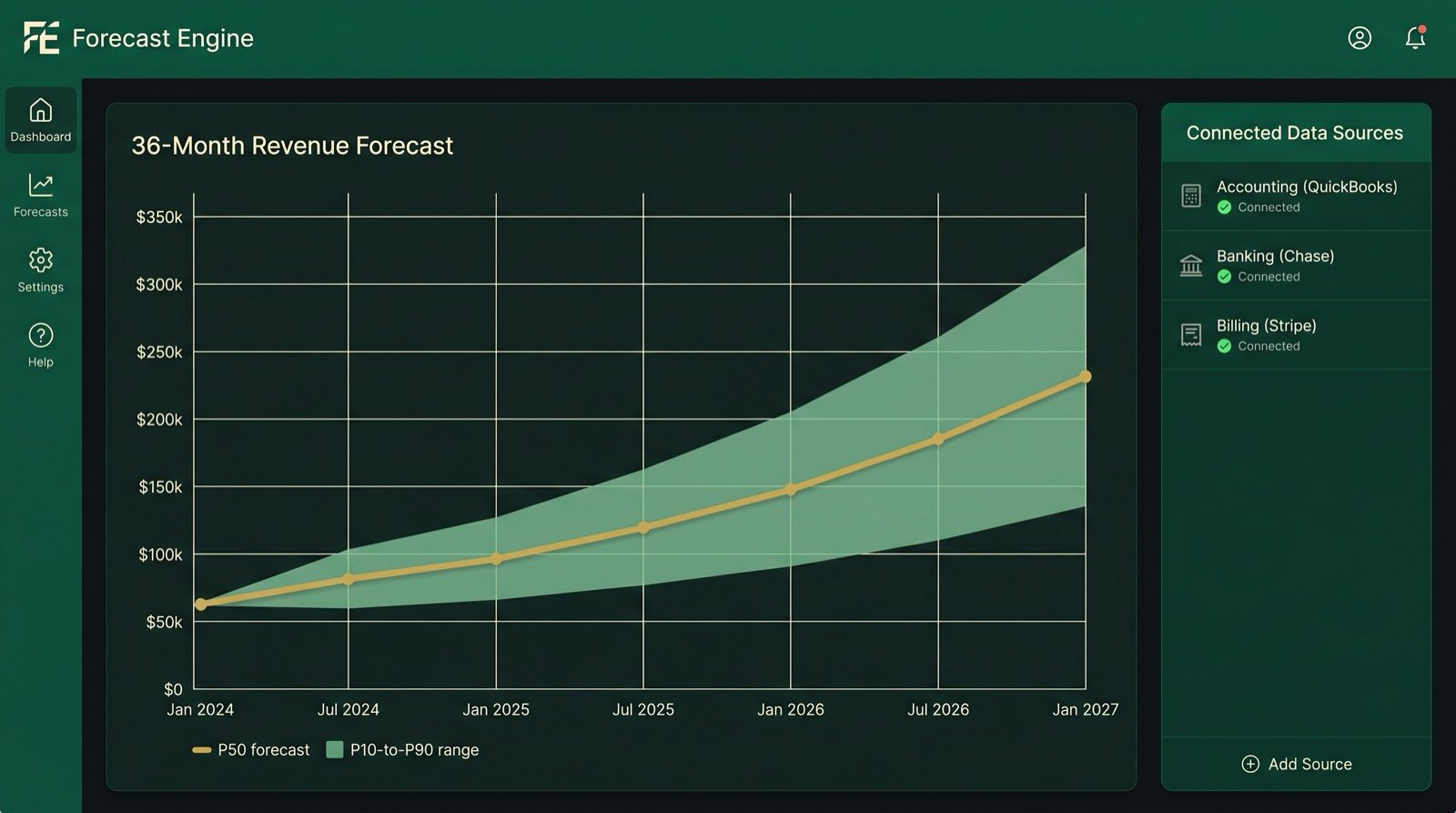
Forecast Engine: costs that connect to outcomes
- Built to sort costs into fixed and variable once, then reuse them everywhere.
- Designed to update break-even units as prices or costs change.
- Meant for testing a cost decision against the full forecast before committing.
Break-even from a simple cost split
Suppose fixed monthly cost is $9,000, variable cost per unit is $12, and the selling price per unit is $30. Contribution per unit is 30 minus 12, which is $18. Break-even units are 9,000 divided by 18, which is 500 units per month.
Why the split matters: Sell 600 units instead of 500 and profit goes from break-even to $1,800 (100 × $18), from a 20 percent rise in volume. Sell 400 and you lose $1,800. That swing is operating leverage, and it works in both directions.
Fixed vs variable cost planning
Frequently asked questions
What counts as a fixed cost?
Costs that stay roughly constant regardless of volume, such as rent, salaries, and insurance.
Why separate the two at all?
Because they behave differently as you grow: fixed costs set your break-even point, and the gap between price and variable cost sets how much each extra sale adds.
Do costs ever move between buckets?
Yes. Some costs are stepped or semi-variable, so revisit the split as the business changes.
Still have questions? Talk to the team.